Download Import Manual




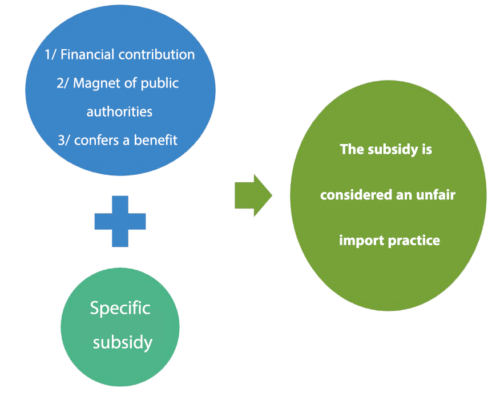
Subsidy is the granting of a benefit to a foreign exporter by the government of the exporting country in the form of a financial contribution that confers a benefit measured against generally applicable trading standards and normal market conditions.

The financial contribution can take one of the following forms:
For the subsidy as defined above to be considered an unfair import practice, it must be “specific”, i.e. reserved for certain companies or when its granting is not subject to objective criteria or that these criteria, despite their existence, are not respected.
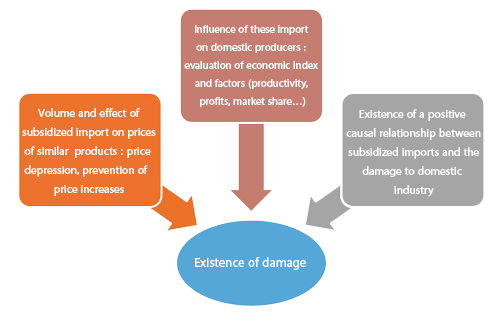
The imposition of countervailing duties can only be applied on the basis of an investigation which has found that the imports in question are subsidized and are causing damage to the domestic industry producing a like product. The damage determination is based on the following positive evidence:
Countervailing duty investigations must cease immediately in cases where the amount of subsidy is de minimis or where the volume of subsidized imports is negligible.
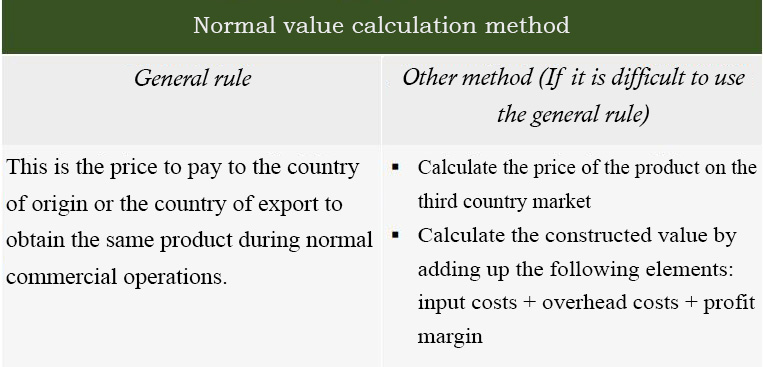
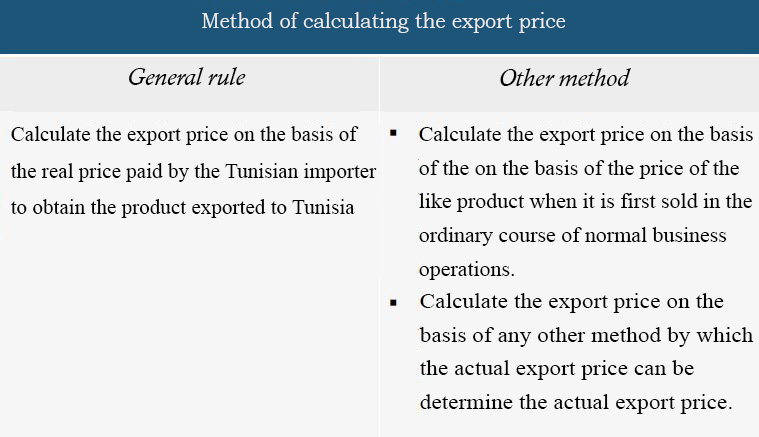
Dumping is a Practice which consists of selling a product on the Tunisian market at prices lower than that of the country of origin or country of provenance. To determine the existence of dumping, a comparison must be made between the export price and the normal value of the product in question. The following two tables make it possible to calculate the two values mentioned above.


Import safeguards measures are taken by the the Ministry of Trade and Export Development after consulting with the National Foreign Trade Council. They consist of raising customs duties or applying a quantitative restriction or a tariff quota.
This makes it possible to deal exceptionally and urgently with a massive increase in imports of a given product causing serious injury or the threat of serious injury to a domestic industry that locally manufactures a similar or directly competitive product.

Les mesures de sauvegardent exigent la présence d’une conjoncture imprévue et exceptionnellement défavorable, ils peuvent s’appliquer jusqu’à 10 ans et sont démantelées de façon progressive afin de permettre à la branche de production concernée de s’adapter au rythme de la concurrence internationale. De même, le produit en question pourrait être soumis à une surveillance préalable à l’importation.
Le dommage grave dans le cadre des enquêtes de sauvegarde est la dégradation générale notable de la situation d’une branche de production nationale, alors que la menace du dommage grave est la situation où le dommage grave causé à la branche de production nationale devient imminent.
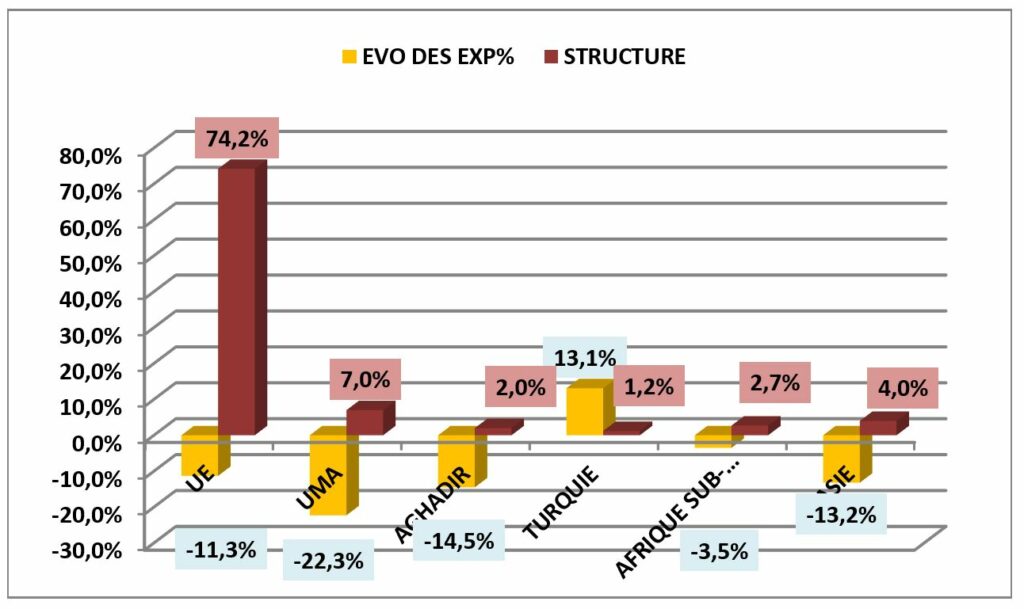
80.0% of Tunisian exports are destined for the EU and UMA during the year 2020, despite the drop in our exports to these two destinations (EU: -11.3%, UMA: -22.3%).
Our national exports also fell to the Agadir zone (-14.5%, share: 2%), sub-Saharan Africa (-3.5%, share: 2.7%) and Asia (-13.2%, share: 4.0%).
On the other hand, our exports recorded an increase to Turkey (+13.1%, share: 1.2%).
Outside the EU, the trade deficit worsens, reaching in terms of value 15819.3 MD (instead of 12757.8 MD), this result shows the importance of our foreign trade with our main partner the EU (ranking first: customer and supplier) and its effect on the national trade balance.
The trade balance deficit recorded in 2020 of around -12757.8 MD is largely explained by the deficit recorded with certain countries:
China: -5393.8 MD
Turkey: -2140.6 MD
Algeria: -1719.5 MD
Ukraine: -1431.9 MD
Russia: -1007.0 MD
India: -608.3 MD
On the other hand, a trade balance surplus is recorded with other countries:
France: 3515.8 MD
Germany: 1217.0 MD
Libya: 1096.3 MD
Morocco: 294.6 MD
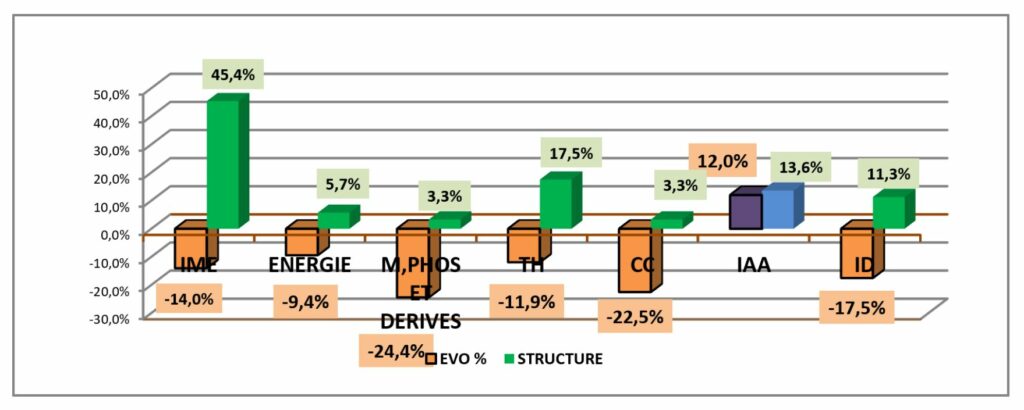
The analysis of exports by sector of activity during the year 2020 shows the following observations:
Selon la structure des exportations le secteur des IME est classé le premier avec une part d’environ 45.4% et une baisse des exportations de -14.0%.
The decline in exports concerns several sectors of activity. The rates vary between -24.4% (Mining, phosphates and derivatives sector) and -9.4% (Energy sector).
On the other hand, the sector of Agriculture and agro-food industries recorded an increase of 12.0% following the increase in our sales of olive oil.
Excluding the Energy, Phosphate Mines and drift sectors, foreign trade during the year 2020 is characterized by:
Trade deficit : 9120.8 MD (instead of 12757.8MD)
Decrease in exports of around 11.4% (instead of -11.7%)
Fall in imports of around 15.0% (instead of -18.7%)
Coverage rate of 79.4% instead of 75.2%
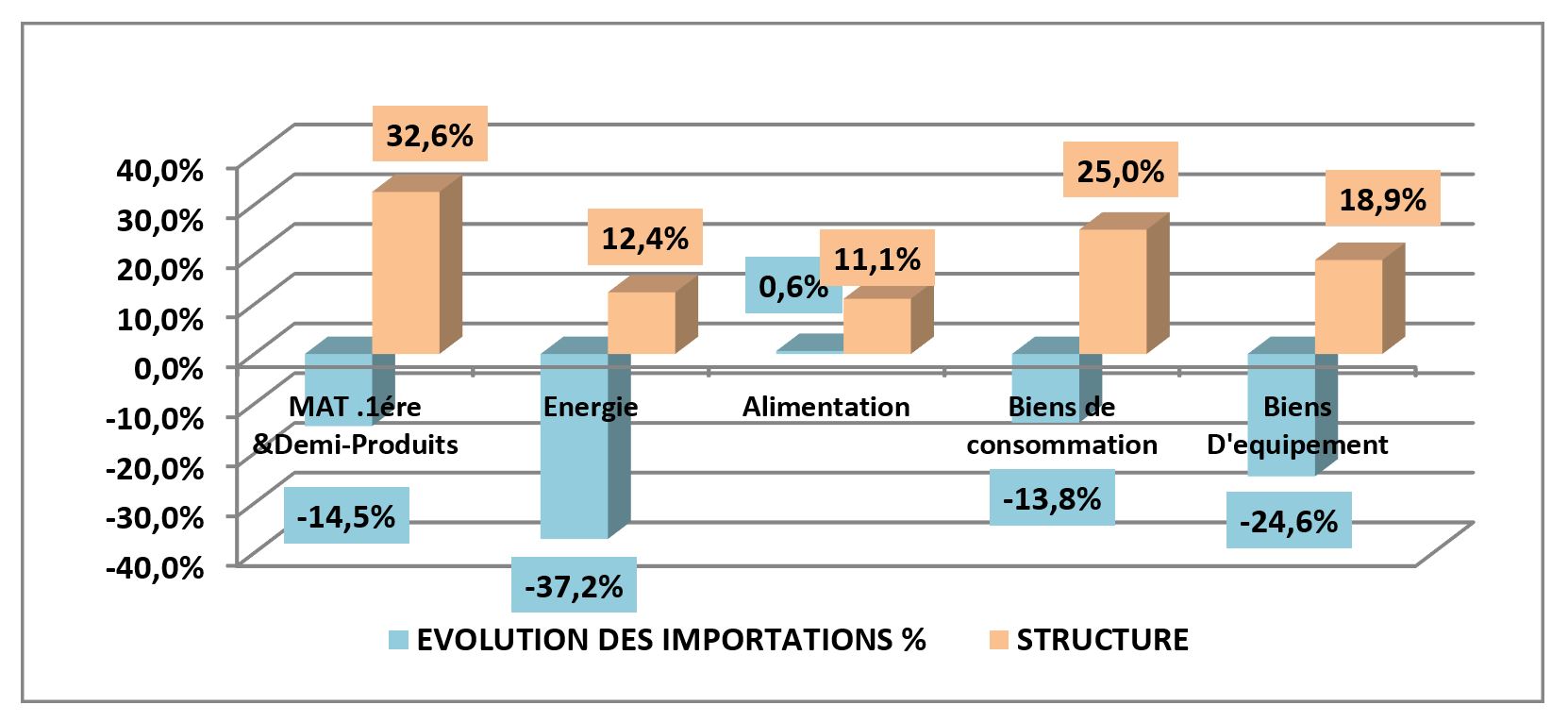
The food product group recorded a slight increase of 0.6% (share: 11.1%) following the increase in our imports of durum wheat, barley, corn and soybean meal.
On the other hand, the rest of the product groups recorded a decline during the year 2020: Raw material & Semi-finished products (-14.5%, share: 32.6%), Consumer goods (13.8%, share: 25.0%), Goods Equipment (-24.6%, share: 18.9%), Energy (-37.2%, share: 12.4%).
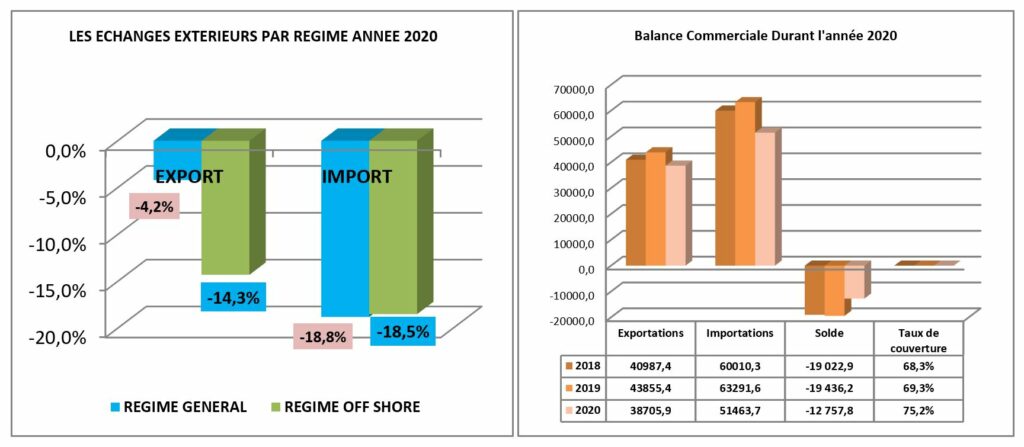
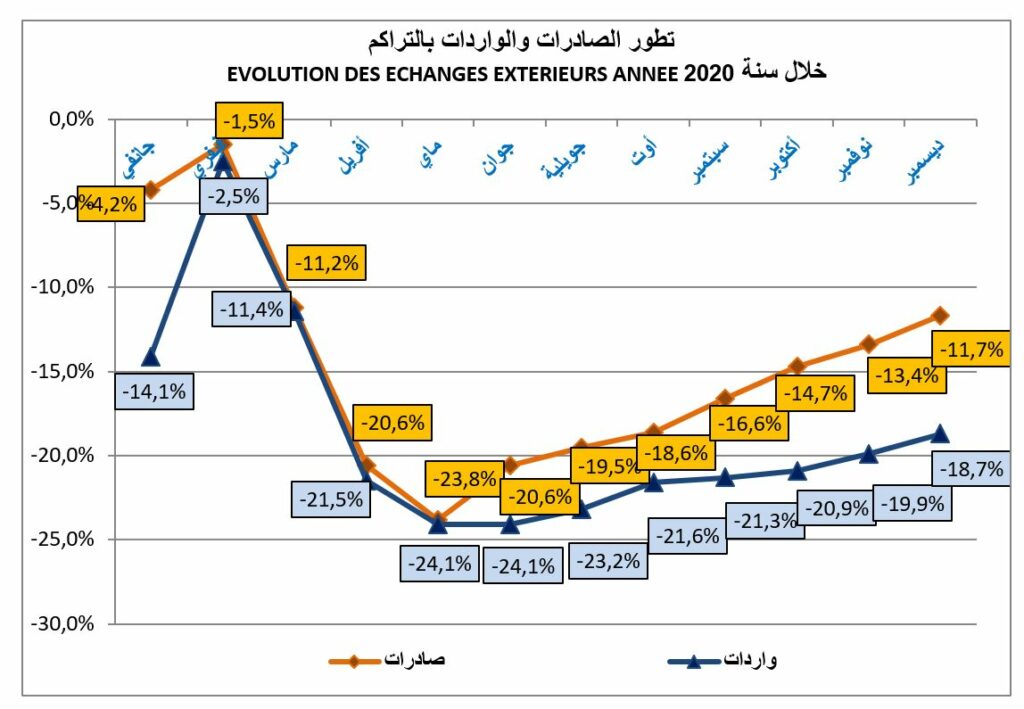
During the year 2020, exports recorded a decrease of 11.7% against an increase of 7.0% in 2019.in terms of value they reached 38705.9 MD against 43855.4 MD in 2019.
As for imports, they recorded a drop of 18.7% against an increase of 5.5% in 2019, in terms of value they reached 51463.7 MD against 63291.6 MD in 2019.
Thus, the trade deficit is reduced by 34.4% or 6678.4 MD. The coverage rate stands at 75.2% (against 69.3% in 2019) recording an improvement of 5.9 points.
The Off shore regime::
Decrease in exports of around 14.3% against an increase of 9.4% in 2019
Imports fell by around 18.5% compared to an increase of 5.9% in 2019
The general regime:
Decrease in exports of around 4.2% against an increase of 0.4% in 2019
Decrease in imports of around 18.8% against an increase of 5.3% in 2019
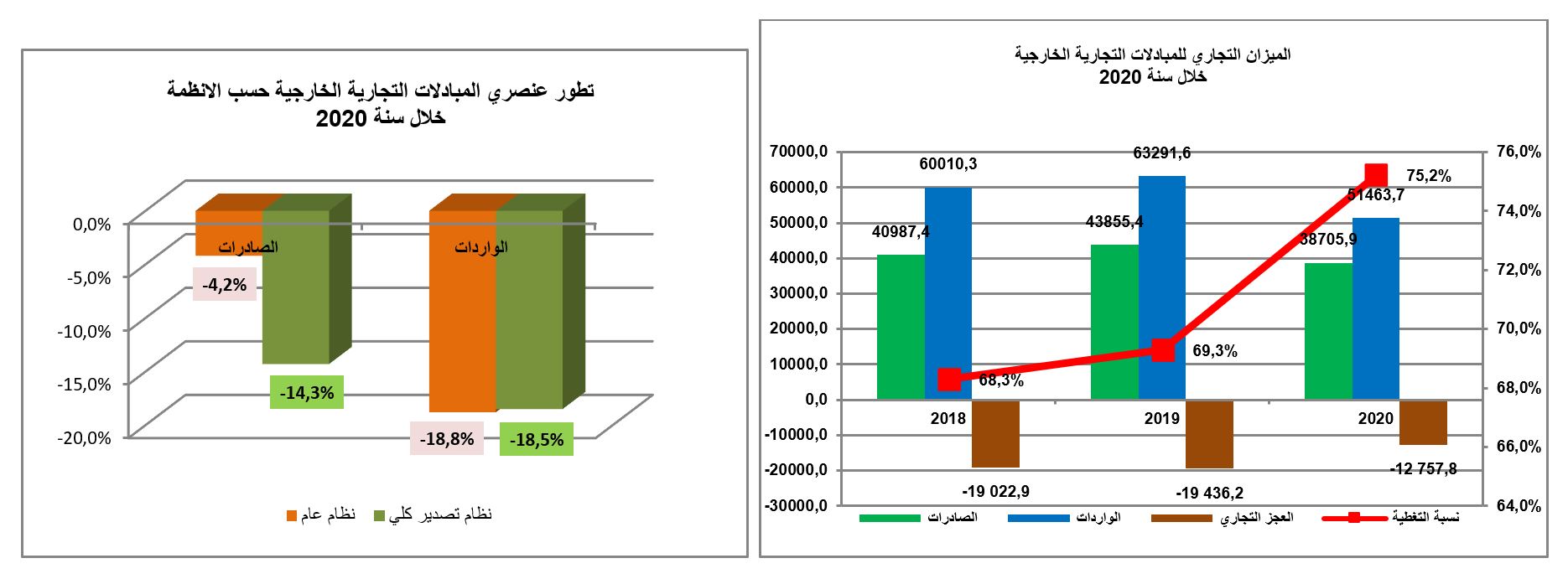
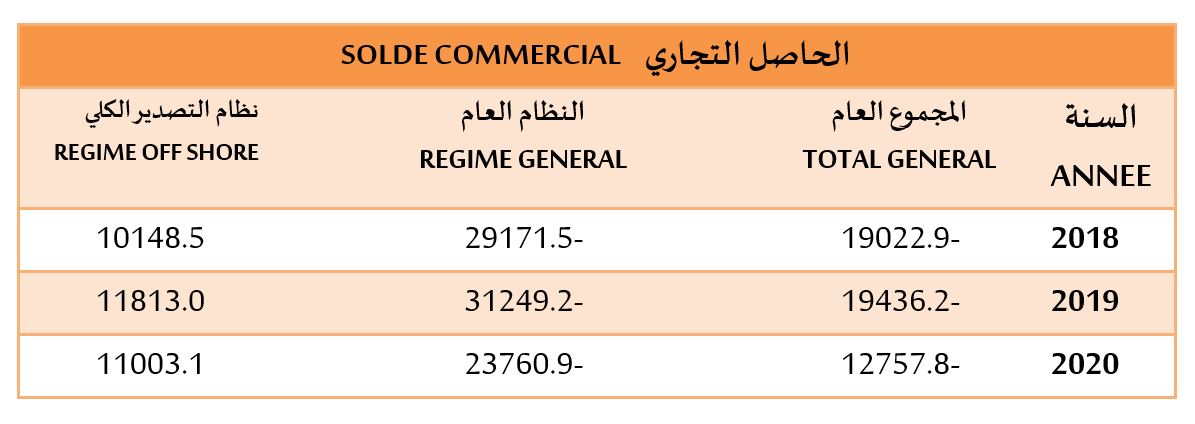
Trade Balance Analysis:
During the year 2020, the trade balance is in deficit by approximately 12757.8 MD (compared to -19436.2 MD in 2019).
According to the foreign trade regime, we note:
The general regime: trade deficit of about 23760.9 MD
The Off shore regime: trade surplus of about 11003.1 MD
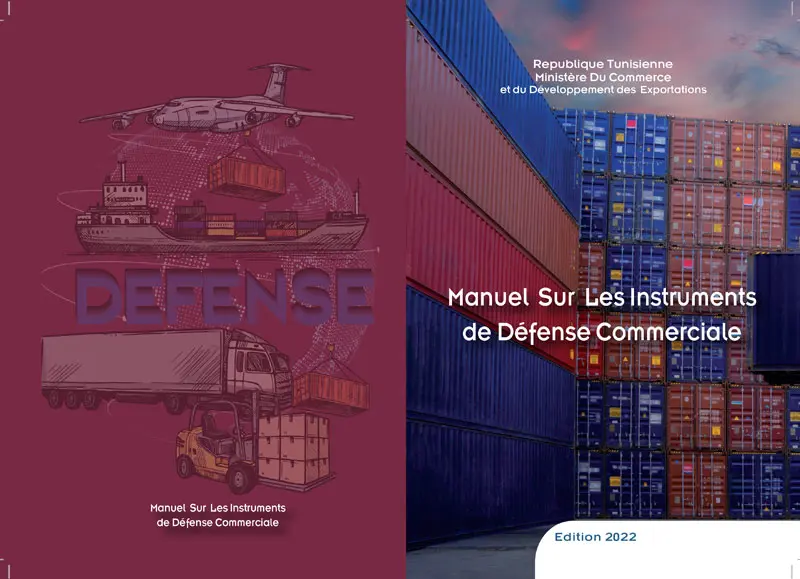
Download the Trade Defense Instruments Manual

This manual aligns with this observation by defining the requirements, processes and minimum conditions required to enable national industrial producers, regardless of their fields of practice and branches of production, to easily resort to the instruments and mechanisms of trade defense as stipulated in the agreements of the World Trade Organization, the law relating to the defense against Unfair Import Practices as well as the law on Import Safeguards.


Anti-dumping measures
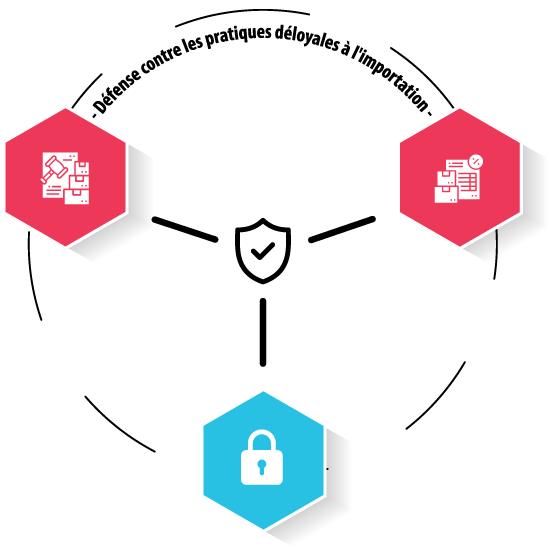
Import safeguard measures
Subsidies and countervailing measures

Subsidies and countervailing
measures
Trade defense measures